PhD, Biological Engineering · Cornell University

Building 3D tumor models to study how physical forces shape cancer.

I combine tumor spheroids, microfluidic devices, imaging and transcriptomics to study tumor mechanics and tumor-immune interactions, and I am moving toward organ-on-chip systems for translational oncology.
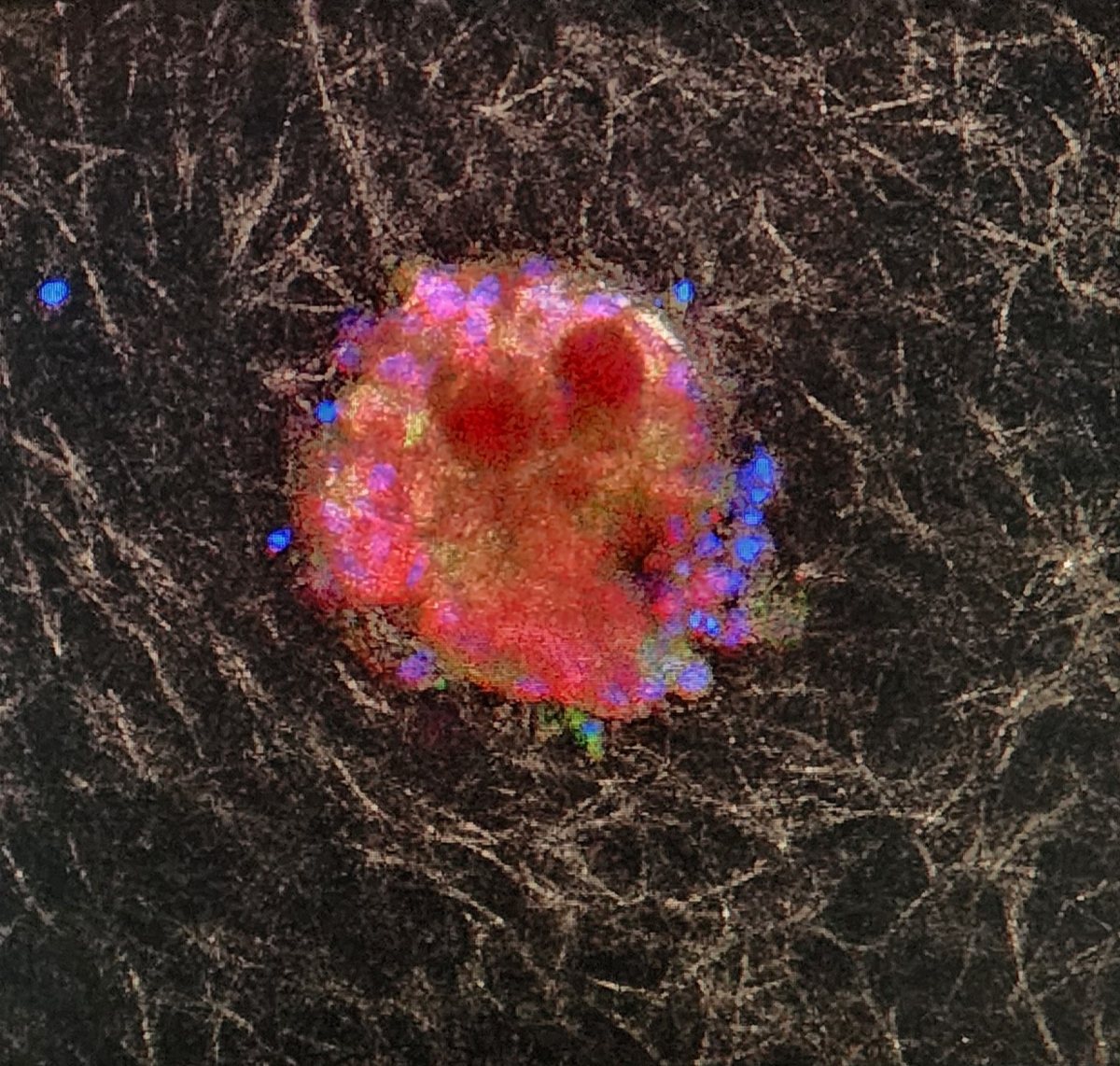
Confocal image of a tumor spheroid embedded in a 3D collagen matrix
Confocal image of a tumor spheroid embedded in a 3D collagen matrix.

Can human-based in vitro models recreate the tumor microenvironment well enough to complement what we learn from animal models?

Portrait of Mrinal Pandey

About

Hi, I’m Mrinal Pandey, a biological engineer with a PhD from Cornell University. My research uses 3D tumor spheroid models, microfluidic platforms, and transcriptomics to study how mechanical forces impact tumor progression and invasion, including how compression suppresses STAT1/IFN signaling in breast tumor spheroids.

I want to bring my work closer to translation using organ-on-chip and microphysiological systems (MPS) that recreate a patient’s tumor microenvironment, including complex tissue and tumor-immune cell interactions. As a next step in my career, I want to work on science that is closer to precision oncology and patient care. Alongside research, I review manuscripts for scientific journals and summarize oncology clinical trial and drug discovery literature for non-scientific audiences. I hold Good Clinical Practice (GCP) and Medical Science Liaison (MSL) certifications. Based in Ontario, Canada.

Illustration of a tumor spheroid being compressed between two plates
STAT1/IFN signaling

An illustration of the finding, not experimental data.

Try it: compress a tumor spheroid

Tumors grow in tight spaces and get squeezed by the tissue around them. During my PhD I developed in vitro models that apply this kind of pressure to 3D breast tumor spheroids embedded in collagen. I then investigated the effect of these stresses on tumor mechanics and invasion.

Drag the slider to apply compression.

  • Mechanics: how compression changes invasion and the viscoelastic behavior of spheroids.
  • Signaling: bulk RNA-seq, qPCR and immunostaining under compression.
  • Immune context: a 3D tumor and NK cell co-culture assay under controlled compression.

Experience

Biocule, Research Liaison (part-time)

Sept 2026 – Present

  • Review oncology clinical trial and drug discovery literature.
  • Build slide decks that communicate scientific findings to non-scientific stakeholders.

Cornell University, Postdoctoral Associate

Feb 2026 – Aug 2026 · Ithaca, NY

  • Led the design and implementation of a 3D tumor–NK cell interaction assay combining collagen-embedded spheroids with controlled mechanical compression.
  • Mentored PhD students on microfluidic platform design, assay validation, and quantitative image analysis.

Cornell University, Graduate Research Assistant & Teaching Assistant

Jan 2020 – Dec 2025 · Ithaca, NY

  • Established 3D breast tumor spheroid systems, including collagen-embedded models and immune co-cultures.
  • Identified suppression of STAT1/IFN signaling under compression using bulk RNA-seq (IPA, GSEA), validated by qPCR and immunofluorescence.
  • Built microfluidic compression devices to measure tumor spheroid viscoelasticity; collaborated with theorists on model fitting.
  • Teaching Assistant: designed, ran, and graded Bioinstrumentation lab sessions for 100+ undergraduates.

Education

  • Cornell University, PhD, Biological Engineering

    Jan 2020 – Dec 2025 · Ithaca, NY
    Member of Alpha Epsilon Biological Engineering Honor Society.

  • KTH Royal Institute of Technology, MSc, Medical Biotechnology

    Aug 2017 – Oct 2019 · Stockholm, Sweden

  • Uttarakhand Technical University, BTech, Biochemical Engineering

    Aug 2010 – Jun 2014 · India

Research interests

  • Organ-on-chip & MPS
  • Tumor-immune interactions
  • Translational models for immuno-oncology
  • In vitro assay development
  • Imaging and transcriptomics for mechanism of action

Skills

  • 3D tumor spheroids
  • Immune co-culture
  • Microfluidics
  • Soft lithography
  • Confocal imaging
  • Immunofluorescence
  • ELISA
  • Western blot
  • qPCR
  • Bulk RNA-seq
  • Experimental design

Software & Analysis

  • MATLAB
  • Python
  • ImageJ
  • GraphPad Prism
  • IPA
  • GSEA

Certifications

  • Medical Science Liaison (Udemy, 2026)
  • Good Clinical Practice (NIDA, 2025)

Interpersonal

  • Leadership
  • Cross-functional collaboration
  • Mentoring
  • Scientific communication

Leadership & Professional Development

COLMAN Inclusive Leadership Program photo

COLMAN Inclusive Leadership Program (Certified)

Cornell University, 2024

Certified program focused on belonging, emotional intelligence, and cultural awareness in leadership. Trained in conflict management and inclusive team leadership.

WE Lead program photo

WE Lead Fellow, Women in Engineering Leadership Program (Certified)

Cornell University, 2023

Selective, certified program for women leaders in engineering and technical disciplines. Trained in strategic decision-making, negotiation, and leading complex technical teams.

International Student Ambassador

KTH Royal Institute of Technology, 2017 – 2019

Represented the KTH Medical Biotechnology program internationally and mentored prospective students on academics, research, and life in Sweden.

Service & Awards

  • Manuscript reviewer for IOP Publishing journals, including Biofabrication and Physical Biology (2025 – 2026)
  • Ag and Bio Engineering Excellence Fund, CALS, Cornell University (2025)
  • Cornell University travel grant (2024)
  • Volunteer, W.O.M.E.N. outreach event, Cornell (2025)
  • CHUST-KTH summer exchange scholarship (2018)
  • Government of India scholarship for academic excellence (2010 – 2014)

Publications

  • 3D mechanical compression suppresses STAT1/IFN signaling in breast tumor spheroids. First author. In review, 2026.
  • Viscoelastic properties of tumor spheroids revealed by a microfluidic compression device and a modified power law model. First author. Soft Matter, 2026.
  • A microfluidic platform for studying roles of mechanical compression in tumor-immune cell interactions in a 3D extracellular matrix. Journal of Visualized Experiments (JoVE), 2026.
  • A microfluidic rheometer for tumor mechanics and invasion studies. Lab on a Chip, 2025.
  • Enhanced extracellular matrix remodeling due to embedded spheroid fluidization. New Journal of Physics, May 2025.
  • Decoding physical principles of cell migration under controlled environment using microfluidics. Biophysics Reviews, July 2024.
  • Mechanical compression regulates tumor spheroid invasion into a 3D collagen matrix. First author. Physical Biology, April 2024.
  • Tumor spheroid invasion in epidermal growth factor gradients revealed by a 3D microfluidic device. Physical Biology, March 2022.
  • Impact of addition of biochar along with Bacillus sp. on the growth and yield of French beans. Scientia Horticulturae, August 2013.

Talks & Posters

  • Mechanobiology Symposium, Cornell University Talk, May 2026.
  • APS March Meeting Talk, March 2026.
  • APS DSOFT Virtual Meeting Talk, November 2025.
  • BMES Annual Meeting Poster, October 2025.
  • Viscoelastic properties of tumor spheroids revealed by a microfluidic rheometer Poster, GRC Physical Science of Cancer, Pomona, CA, March 2025.
  • The mechanics of tumor spheroids revealed by a 3D microfluidic rheometer Bulletin of the APS, 2024.
  • Effect of compression on tumor fluidity and invasion Talk, APS March Meeting, Chicago, IL, 2022.
  • Impact of biochar with Bacillus sp. on French beans HBTI Kanpur, India, 2013.

Full list on Google Scholar.

Beyond Research

Science is a big part of my life, but not the only part. Here are a few things that keep me energized outside the lab.

Mountain hiking trail

Hiking & Outdoors

Exploring trails and mountains. Recharging in nature is where I get my best ideas.

Kayaking trip group photo Biking on a trail

Perfect kayak and biking buddy

Always up for some outdoor fun.

Let’s connect

I’m always happy to talk about organ-on-chip models, tumor-immune biology, and translational oncology, or to explore collaborations.

Top